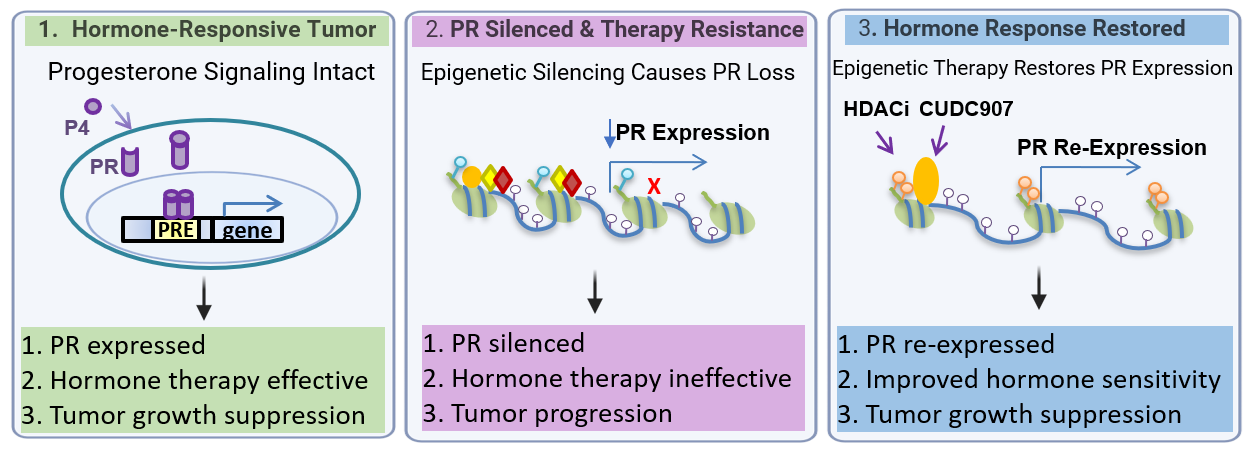
Endometrial cancer is one of the few solid tumors that can often be treated with hormone-based therapy, offering an effective and less toxic alternative to conventional chemotherapy.
However, many advanced and recurrent tumors lose progesterone receptor (PR) expression and become resistant to treatment, leaving patients with limited therapeutic options. Understanding how hormone responsiveness is lost remains a major challenge in the field.
Our laboratory investigates the molecular and epigenetic mechanisms that regulate progesterone receptor expression and function. By developing strategies to restore hormone responsiveness through targeted epigenetic and pharmacologic approaches, we seek to expand treatment options for patients whose tumors no longer respond to hormonal therapy. Our work also aims to identify predictive biomarkers that can guide personalized treatment decisions and improve clinical outcomes.
Key topics: Progesterone receptor regulation, hormone therapy resistance, epigenetic therapy, HDAC inhibitors, predictive biomarkers
Why Hormone Therapy Matters
Progesterone is a natural tumor suppressor in the endometrium and can be effective treatment for selected patients with endometrial cancer. However, many tumors become resistance because they lose expression of progesterone receptor (PR), the key mediator of progesterone signaling. For more than a decade, our laboratory has investigated why PR expressions are lost and how hormone sensitivity can be restored.
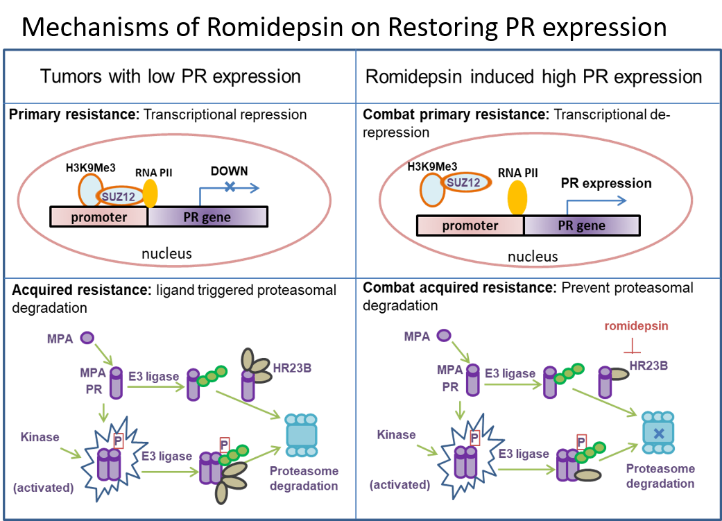
Epigenetic repression of the progesterone receptor can promote hormone resistance, whereas targeted therapies may restore PR expression and progesterone responsiveness.
Reactivating PR Through Epigenetic Therapy
Because epigenetic alterations are potentially reversible, we explored whether targeted therapies could restore functional PR expression. Our studies demonstrated that HDAC inhibitors increase PR levels, reactivates progesterone-regulated genes, and sensitize tumors to progestin treatment. These findings support combining epigenetic therapy with hormonal therapy as a strategy to overcome resistance.
Developing Biomarkers and New Treatment Strategies
Our laboratory developed innovative tools, including an endogenous PR reporter system, to identify compounds that restore PR expression and to investigate the mechanisms regulating hormone responsiveness. We also discovered that loss of PR is associated with poor clinical outcomes across multiple solid tumors, highlighting the broader significance of this pathway.
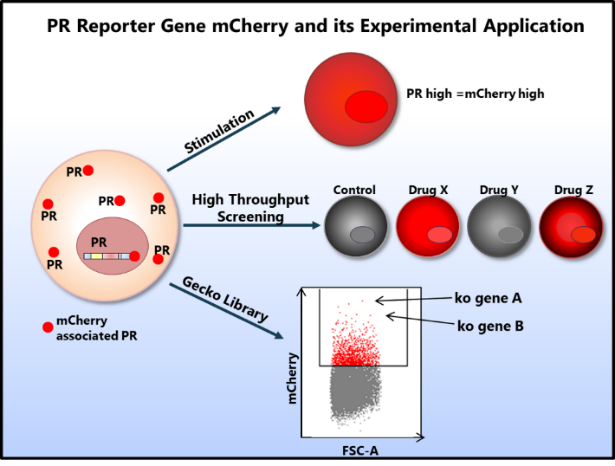
We developed an endogenous PR-mCherry reporter system that enables high-throughput identification of regulators and therapeutic strategies that restore progesterone receptor expression.
Bringing Discoveries to Patients
The ultimate goal of this work is improving treatment options for women with endometrial cancer. Through our NIH-funded research program and ongoing analysis of the NRG-GY011 clinical trial, we are examining how epigenetic therapy may enhance hormonal treatment responses and identifying biomarkers that predict benefit. These studies aim to bridge laboratory discoveries with clinical application.