Cancer development is driven not only by genetic mutations but also by epigenetic mechanisms that determine which genes are turned on or off.
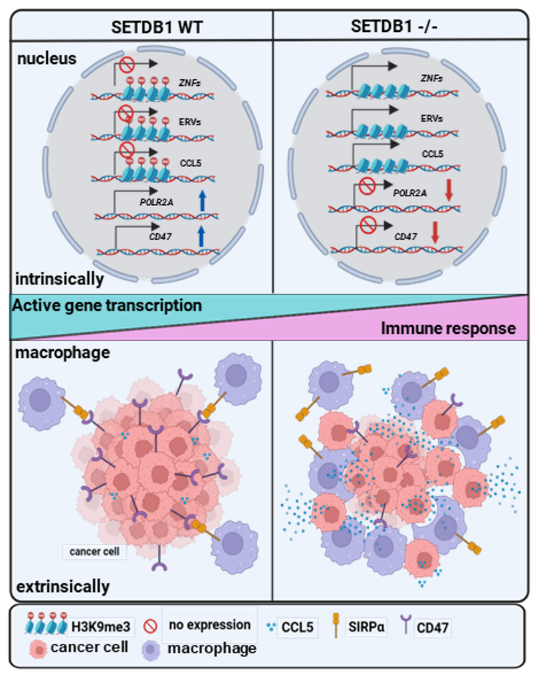
Among these regulators, SETDB1, a histone lysine 9 methyltransferase, has emerged as a key oncogenic factor that promotes tumor progression and enables cancer cells to evade immune surveillance. Our laboratory investigates how SETDB1 controls transcriptional programs, chromosome stability, and tumor-immune interactions in endometrial cancer.
Recent work from our group revealed that SETDB1 contributes to both tumor progression and immune escape. Building on these discoveries, ongoing studies seek to define how SETDB1 regulates gene expression, chromosome stability, and anti-tumor immunity, with the goal of identifying new therapeutic opportunities for patients with SETDB1-driven cancers.
Key topics: SETDB1 biology, H3K9 methylation, transcriptional regulation, chromosome segregation, tumor immunology, macrophage-mediated immunity
Why SETDB1 Matters
SETDB1 (SET Domain Bifurcated Histone Lysine Methyltransferase 1) is an epigenetic regulator that deposits H3K9Me3, a chromatin mark traditionally associated with gene silencing. Increasing evidence suggests that SETDB1 is amplified or overexpressed in multiple cancer types, where it promotes tumor growth and contributes to immune evasion. Our laboratory studies how SETDB1 regulates endometrial cancer progression and whether targeting SETDB1-dependent pathways may create new therapeutic opportunities.
Beyond Gene Slicing
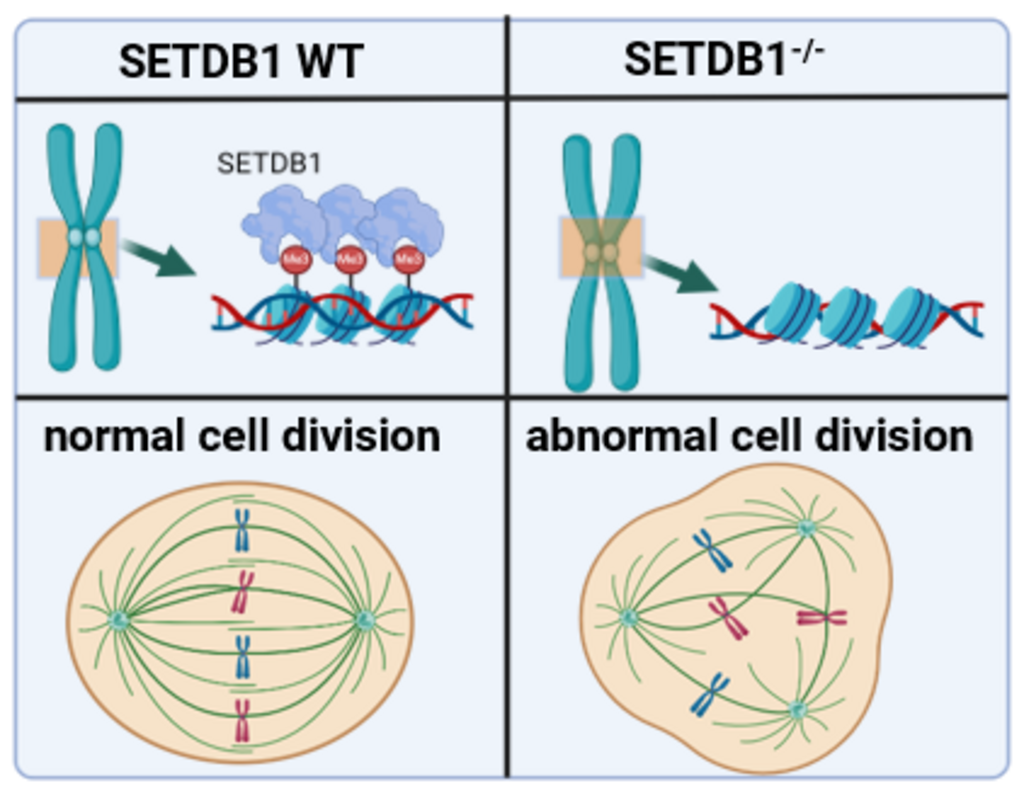
SETDB1 is best known for forming repressive chromatin, but our work suggests that it may also support transcription of genes required for cell division. Loss of SETDB1 reduces expression of numerous mitotic regulators and produces chromosome segregation defects. These findings raise that possibility that SETDB1 functions beyond gene silencing to help maintain transcriptional fidelity.
Genome Stability
Faithful chromosome segregation is essential for genome integrity. In our studies, SETDB1-deficient cells exhibit abnormal mitosis and chromosome instability. We are investigating how SETDB1-dependent chromatin regulation supports the expression of genes involved in spindle assembly, cytoskeletal organization, and mitotic progression.
Tumor Immune Escape
Recent studies have identified SETDB1 as an important regulator of antitumor immunity. Our work examines how SETDB1 loss alters immune signaling and macrophage interactions in endometrial cancer. Understanding these mechanisms may reveal new strategies to enhance immune responses again to tumors.
Our Vision
Our long-term goal is to understand how epigenetic mechanisms shape cancer behavior. By studying SETDB1, we seek to connect transcriptional regulation, chromosome stability, and tumor-immune interactions, with the ultimate aim of identifying new therapeutic vulnerabilities in endometrial cancer.