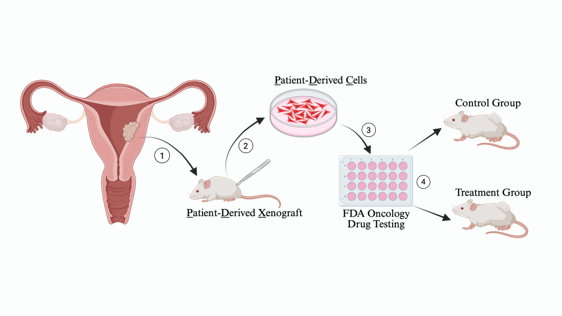
Patients with endometrial cancer can respond very differently to the same treatment, highlighting the need for personalized therapeutic strategies.
Traditional cancer cell lines often fail to capture the biological diversity and complexity of human tumors, creating barriers to the development of effective therapies.
To address this challenge, our laboratory has established an extensive collection of patient-derived endometrial cancer models, including patient-derived xenografts (PDXs) and patient-derived cancer cells (PDCs). These models preserve the molecular and pathological characteristics of the original tumors and serve as powerful tools for translational research. By combining genomic profiling with functional drug testing, we aim to identify therapeutic vulnerabilities, predict treatment response, and accelerate the development of precision medicine approaches for women with endometrial cancer.
Key topics: Patient-derived xenografts (PDX), patient-derived cancer cells (PDC), drug screening, precision medicine, translational therapeutics
Why Patient-Derived Models Are Needed
Every endometrial cancer is different. While genomic profiling has improved our understanding of tumor biology, patients with similar tumors can respond very differently to the same treatment. Our laboratory uses patient-derived cancer models to better capture the biological diversity of endometrial cancer and to identify therapies tailored to individual tumors.
Building a Living Biobank
Over the past couple of years, we have established a comprehensive collection of patient-derived endometrial cancer models, including primary cell cultures, spheroid cell cultures, and patient-derived xenografts (PDXs). These models preserve many of the molecular and biological features found in the original tumors, creating a valuable resource for studying cancer biology and therapeutic response.

Our patient-derived biobank captures the histologic diversity of endometrial cancer, providing a valuable resource for translational research and therapeutic discovery.
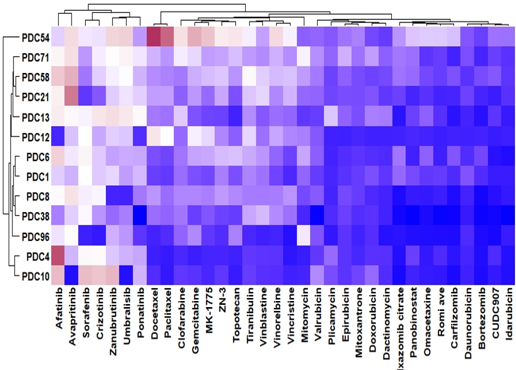
Functional drug screening identifies therapeutic vulnerabilities across patient-derived endometrial cancer models.
Drug Screening and Therapeutic Discovery
Using these patient-derived models, we perform functional drug screening to identify new treatment opportunities. Our studies have evaluated targeted therapies, epigenetic drugs, hormone-based treatments, and FDA-approved oncology compounds. To date, our laboratory has evaluated 179 FDA-approved oncology drugs using patient-derived models, identifying both expected and unexpected therapeutic vulnerabilities across diverse endometrial cancer subtypes. By directly testing drug responses in patient-derived tumors, we can identify promising therapeutic strategies that may not be predicted by genomic analysis alone.
Precision Oncology Applications
Our long-term goal is to integrate molecular profiling with functional drug testing to guide personalized treatment strategies. By combining genomic data, biomarker analyses, and drug response information, we seek to better understand why therapies succeed or fail and to identify patient populations most likely to benefit from specific treatments.
Future Directions
We envision a future in which laboratory models can help inform clinical decision-making and accelerate drug development for women with endometrial cancer. Through collaborations with clinicians, scientists, and clinical trial networks, we aim to bridge the gap between laboratory discoveries and improved patient care.